Our temporary deities are currently here. Permanent deities will be installed soon.
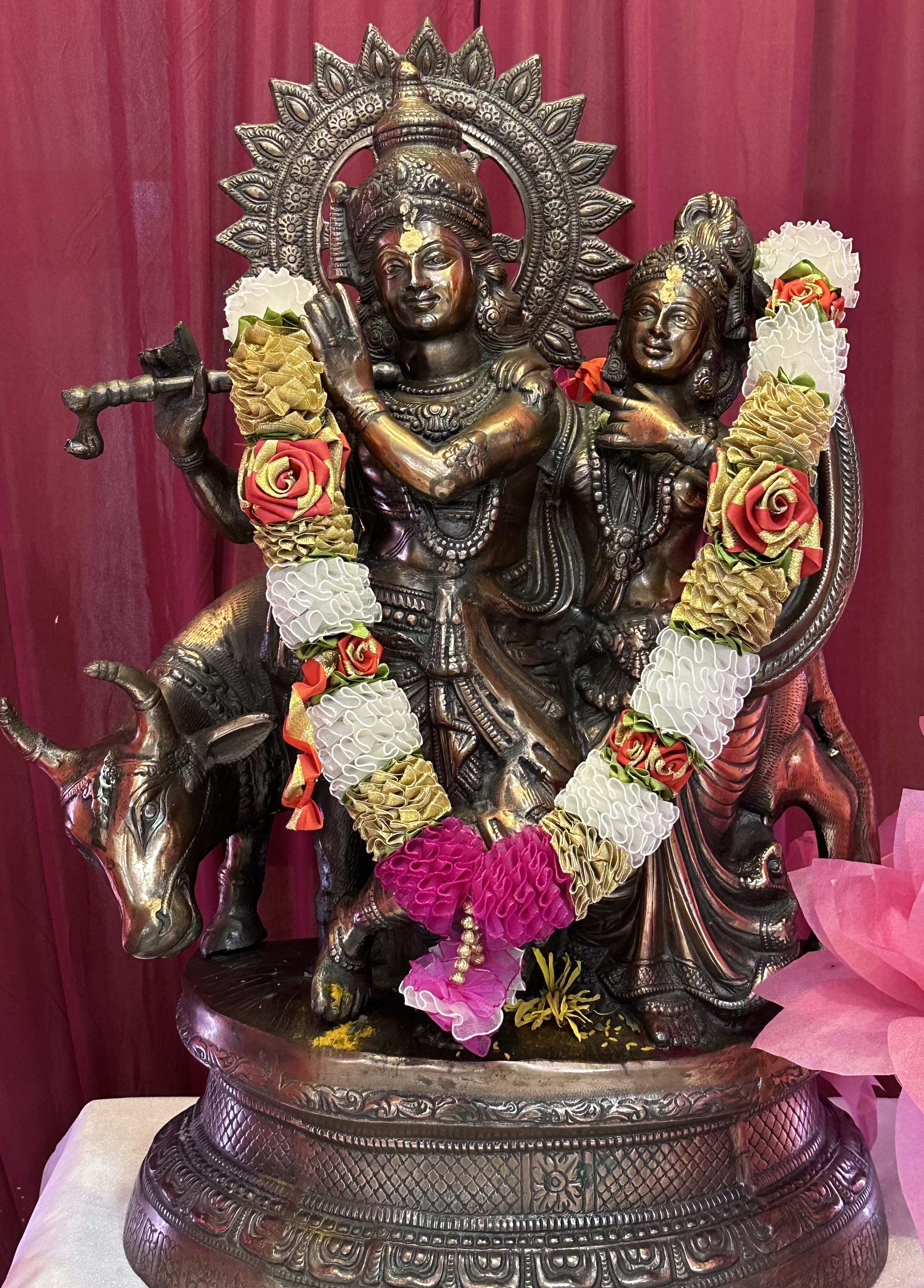
Description of Shri Radha Krishna: Shri Radha and Krishna together show the infinite form of God and the pure devotion needed to serve God. In the Vedic scriptures, Lord Krishna is praised as the Supreme Person, full of bliss and truth. Shri Krishna’s divine actions teach us important lessons about selfless service and keeping hope during difficult times. Shri Radha represents pure, selfless love for God and is seen as the feminine energy, or shakti, of God. Shri Radha’s loving actions with Krishna in Vrindavan show that true devotees remember God always.

Lord Shiva: The Benevolent Protector and Destroyer
Lord Shiva is worshipped as both the Destroyer and Benevolent Protector, embodying divine balance. He is known as “Bholenaath” (the easily pleased Lord) and “Maheshwar” (the Greatest Lord). Shiva is often depicted as an ascetic residing on Mount Kailasa with his wife Parvati and their children, Ganesh and Kartik. In Puranic scriptures, Shiva is shown as fiercely protective of his devotees, destroying anyone who threatens them. Notable examples include saving the great devotee Markandeya from Yamraaj and punishing King Daksha for disrespecting his wife, Sati. Shiva’s life teaches us the importance of balancing worldly responsibilities with spiritual detachment, living like a yogi who seeks nothing in return.
Shiva is also regarded as the origin of many cultural and artistic traditions in Hinduism. The classical dance form Bharatanatyam is said to have been passed from Shiva to the sage Bharat. The Sanskrit language is believed to originate from the sound of his drum (the damaru), while Tamil was taught by Shiva to the sage Agastya. Two thousand years ago, Lord Shiva incarnated as Adi Shankaracharya, who composed hymns, songs, and philosophies that continue to enrich Hindu worship and teachings today. Through these contributions, Shiva’s legacy bridges spirituality, art, and culture, inspiring generations to live with devotion and purpose.